


Cat Body Language Cheat Sheet: Decode Feline Signals
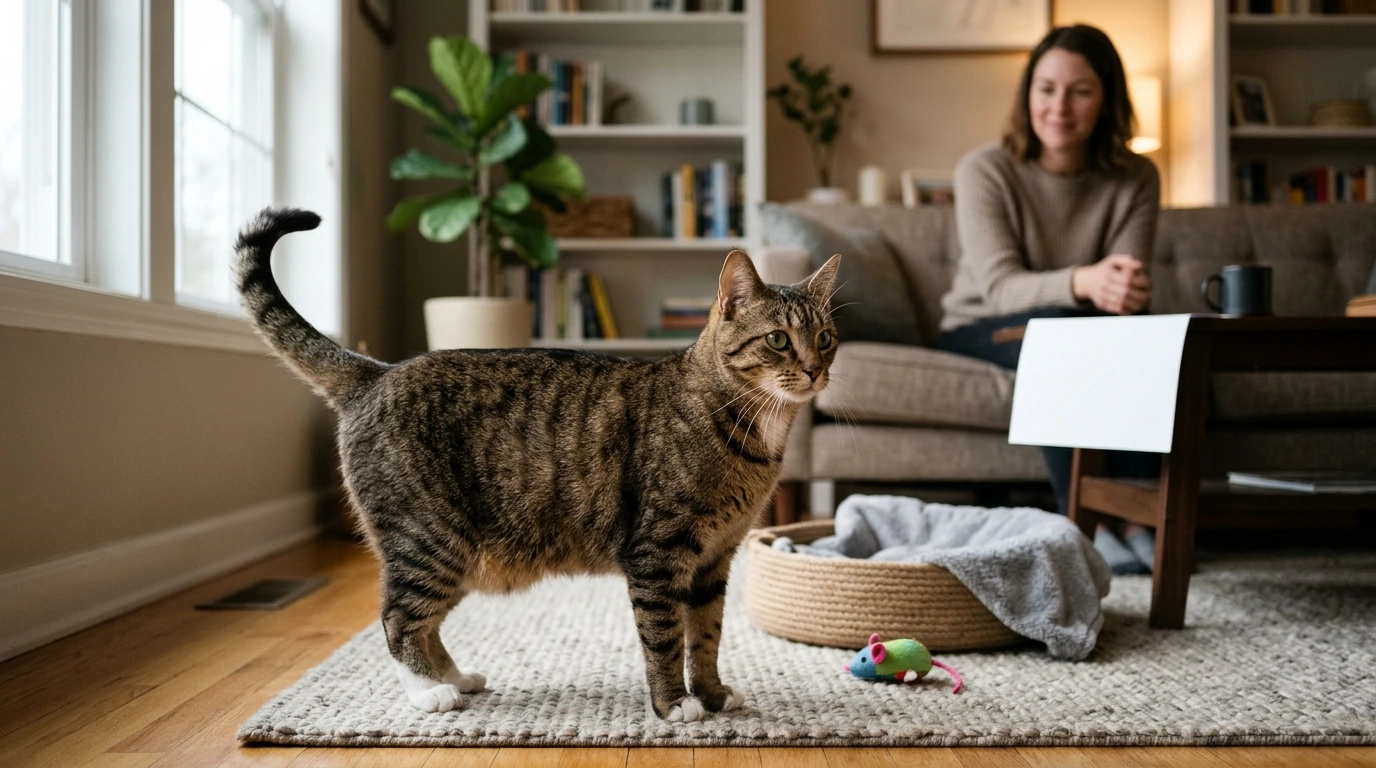
Cats communicate with more than meows. A raised tail, a change in posture, or a pair of flattened ears can offer clues about how your cat is feeling. Our printable cat communication guide gives you a convenient reference for noticing those signals, whether you’re spending time together at home or introducing a new routine. For more guidance, see How to Read Cat Body Language and Emotions.
No single cue tells the whole story. Look at your cat’s body from ears to tail, listen for vocalizations, and consider what’s happening nearby. With practice, you can learn your cat’s habits and respond in ways that help them feel more comfortable. For further reading, see Understanding Cat Behavior and Feline Language.
Start With the Whole Cat
Imagine your cat is sitting near you with wide eyes. That expression might accompany excitement during play, concern about an unfamiliar sound, or a response to dim lighting. The rest of the body and the situation help you interpret it.
Notice the position of the ears, the shape of the eyes, the movement of the tail, and whether the body looks loose or tense. Add any sounds to the picture: a meow, hiss, or growl can provide context, but vocalizations also vary from one cat to another.
Start by watching your cat during ordinary moments. How do they hold their tail when they greet you? What do their ears look like when they settle down to rest? Learning their usual behavior gives you a useful baseline for spotting changes.
Also pay attention to the environment. A visitor, another animal, a loud appliance, or an interrupted meal can influence your cat’s response. The ASPCA’s guide to cat body language offers more information about reading these combinations of signals.
Common Signals at a Glance
Use this table as a starting point, not a definitive diagnosis of your cat’s mood. Signals can overlap, and your cat’s individual habits matter.
| Signal | Possible meaning | Helpful response |
|---|---|---|
| Relaxed body and gently upright tail | Often comfortable or friendly | Allow the cat to approach |
| Flattened ears and crouched posture | May be fearful or defensive | Give the cat space and reduce nearby stress |
| Rapidly swishing tail | May indicate arousal or irritation | Pause interaction and watch for other cues |
| Slow blink with a relaxed posture | Can signal comfort | Respond calmly without forcing contact |
| Meowing | Meaning varies with the cat and situation | Check context and familiar needs |
When several signs of fear or tension appear together, give your cat room to move away. Avoid reaching toward them or trying to pick them up. If possible, reduce the source of stress and let them choose when to return.
Put the Printable Guide to Work
Our Cat Body Language & Behavior Cheat Sheet is a $9.99 printable reference for learning about feline signals, postures, and meows. Keep it somewhere convenient, such as near your cat’s supplies, so you can consult it while building your observation skills.
Compare the cues in the guide with what you see at different times of day. During play, notice whether your cat remains engaged or begins swishing their tail rapidly. At rest, look for the loose posture and expressions that are normal for them. Around feeding time, observe how their vocalizations and movements change.
Share what you learn with everyone in your household. A consistent, gentle response makes it easier to respect your cat’s boundaries: pause petting when your cat shows discomfort, avoid cornering them, and give them a choice about approaching. You can also note patterns over time, including what happened just before a behavior and how your cat responded afterward.
Make Everyday Observation Easier
A calm environment can make it easier to notice changes in behavior. Give your cat access to familiar places where they can retreat, and allow them to leave an interaction without being followed. When you introduce a household change, watch how they respond rather than assuming a particular reaction.
If you’re considering an air purifier for your home, our Advanced HEPA & Activated-Carbon Air Purifier is another option to explore. Place any new appliance where your cat can move away from it, and observe whether its sound or presence affects their behavior. An appliance is not a substitute for veterinary care or a way to interpret body language on its own.
Know When to Ask for Help
A sudden change in behavior or vocalization can have a medical cause. If your cat becomes unusually withdrawn, vocal, irritable, or otherwise different from their normal self, contact your veterinarian. Mention other changes you’ve noticed, such as changes in appetite, drinking, grooming, or litter box habits.
Our team recommends using a cheat sheet as an observation aid, not as a way to diagnose illness. Likewise, don’t use it to justify forcing contact with a frightened cat. Your veterinarian can help assess a change and advise you on next steps. The Cornell Feline Health Center’s cat behavior resources offer additional guidance.
FAQ
What does a swishing cat tail mean?
A swishing tail can indicate arousal or irritation. Look at your cat’s posture and ears, and consider what is happening around them before deciding how to respond.
Can a meow tell me exactly what my cat wants?
Not on its own. Consider the situation, your cat’s body language, and their individual habits to help interpret the sound.
When should I contact a veterinarian about a behavior change?
Contact your veterinarian when your cat’s behavior or vocalization changes suddenly, especially if you notice other signs of illness. Share what changed and when you first noticed it.
Recommended for you



A Smart, Stylish Guide to Decorating Your Space
Nov 6, 2026













Leave a comment